
Karwa Chauth Pooja Essentials: Preparing for the Evening Ritual
Discover the traditional pooja thali essentials, customary offerings and meaningful rituals that help families prepare for Karwa Chauth evening.

Karwa Chauth is a cherished occasion in many Indian households, bringing together devotion, family traditions and the anticipation of the evening moonrise. For many married women, the day involves fasting, dressing in festive attire, gathering with family members and preparing for the traditional pooja observed before breaking the fast.
An important part of this preparation is arranging the pooja essentials. From the traditional karwa and decorated pooja thali to the diya, sieve and customary offerings, each item has a place in the ritual as practised by different families and communities.
Whether you are observing Karwa Chauth for the first time or continuing a tradition followed through generations, understanding these essentials can help you prepare thoughtfully for the evening.
What Is Karwa Chauth Pooja?
Karwa Chauth is traditionally observed by many married Hindu women, particularly in parts of North and Western India. The observance is commonly associated with prayers for the well-being and longevity of one's husband. Today, families may also interpret and celebrate the occasion in their own ways, while preserving the customs passed down through generations.
The evening pooja is a central part of the observance in many communities. Women gather, arrange their pooja thalis, listen to or recite the Karwa Chauth vrat katha, and participate in customary prayers. In many traditions, the fast is concluded after the moon is sighted, followed by the customary moon-viewing ritual.
The exact sequence, prayers and offerings may vary according to regional practices, family traditions and local customs.
Karwa Chauth Pooja Essentials: A Complete Checklist
Preparing the pooja items in advance makes the evening more organised and allows you to focus on the observance rather than searching for things at the last moment.

Here are the traditional essentials commonly used during Karwa Chauth. Not every household uses every item, so follow the customs familiar to your family.
1. Karwa or Lota: The Traditional Water Vessel
The karwa is a small pot traditionally made of clay, brass or other metals. A lota or another suitable water vessel may also be used, depending on family custom. Water is commonly associated with the moon-viewing ritual, during which some families offer arghya to the moon.
The vessel may be filled and prepared according to the ritual followed by your family. In some traditions, water may be mixed with a small quantity of milk, sugar or rice, while others follow different practices. Check your customary instructions rather than assuming every household prepares the offering in the same way.
When selecting a vessel, consider its size, material and ease of handling during the evening ritual.
2. Pooja Thali: Bringing the Ritual Essentials Together
The pooja thali holds many of the items required for the evening ritual. It may be a traditional metal plate or a decorated thali prepared especially for the occasion.
Common items arranged on the thali include:
· Roli or kumkum for customary tilak rituals
· Akshat, or whole rice grains used in worship
· A small diya and suitable lighting material
· Flowers or flower petals
· Sweets or other customary offerings
· A small container of water, where required by the family ritual
Some households also include a small lota, additional bowls or other items specified by their family tradition.
You can decorate the thali with flowers, a traditional cloth, or a simple rangoli-inspired design. Keep the arrangement practical, ensuring that the diya is placed securely and that the items needed during the ritual are easy to reach.
3. Diya: The Light of the Evening Ritual
A diya is commonly used in Hindu worship and is an important part of many festive rituals, including Karwa Chauth.
The gentle light of a diya creates a devotional atmosphere and forms part of the traditional pooja arrangement. Brass diyas are appreciated for their traditional appearance, durability and suitability for repeated use during festivals and daily worship.
Before lighting the diya, place it on a stable, heat-resistant surface away from loose fabric, flowers and other flammable materials. Never leave a burning diya unattended.
4. Roli, Kumkum and Haldi: Traditional Pooja Powders
Roli, kumkum and haldi (turmeric) are customary items used in many Hindu worship practices. Depending on family tradition, they may be used for applying tilak, marking ritual objects or preparing the pooja thali.
Roli and kumkum are commonly associated with red auspicious markings, while turmeric has a place in various traditional rituals. Keep these items in small, separate bowls so they are easy to access during the pooja.
Their exact use and application can vary across regional and household traditions, so follow the practices familiar to your family.
5. Sindoor: A Traditional Symbol of Marriage
Sindoor holds cultural and marital significance in many Hindu communities and may be included in the Karwa Chauth pooja arrangement. Some women keep it on the thali as part of their customary shringar and evening preparations.
Practices surrounding sindoor vary across communities and families. Include it according to your household's tradition.
6. Fresh Fruits and Flowers: Offerings for the Pooja
Seasonal fruits and fresh flowers are commonly included in Hindu worship. Marigolds, roses and other locally available flowers can add a festive touch to the pooja arrangement, while fruits may be offered according to family practice.
Depending on your household tradition, fruits may be placed on the pooja thali, arranged on a separate plate or kept with the other customary offerings. Flower petals can be arranged around the thali, while a small garland may be used to decorate the pooja space.
Prepare the fruits and flowers in advance so they are ready when the evening ritual begins. Choose offerings according to your family customs, local availability and personal preference.
7. Channi or Sieve for the Moon-Viewing Ritual
One of the best-known Karwa Chauth customs involves viewing the moon through a sieve, or channi, followed by looking at one's husband through it in many traditional observances.

The sieve is often kept ready before the expected moonrise so it can be found easily when the time comes. Some families use a simple kitchen sieve, while others prefer a decorative one reserved for the occasion.
This familiar ritual has become a memorable part of how many families observe Karwa Chauth, although the details may differ across communities.
8. Mithai and Mathri: Traditional Sweets and Savoury Offerings
Mithai and mathri are customary parts of Karwa Chauth preparations in many North Indian households. Sweets such as ladoos, barfi and kaju katli may be prepared or purchased for the occasion, while mathri, a traditional savoury snack, is often included in festive offerings.
Depending on family customs, these foods may be arranged on the pooja thali, included in the baya or bayna gift offering, or served to family members after the evening rituals. They reflect the hospitality, sharing and festive food traditions associated with Karwa Chauth.
9. Red or Pink Cloth (Chunni): A Festive Touch
A red or pink chunni is often used to decorate the pooja thali or cover a karwa in certain family traditions. Red and pink fabrics are also commonly associated with festive attire and bridal adornment in many North Indian celebrations.
An embroidered or embellished chunni can lend a traditional appearance to the arrangement. Its use and symbolism may differ between households, so follow the customs familiar to your family.
10. Baya or Bayna: A Traditional Gift Offering
Baya, also referred to as bayna or bayana, is a traditional gift offering associated with Karwa Chauth in many families, particularly in North Indian customs.
It is often prepared for the mother-in-law and may include sweets, mathri, dry fruits, clothing such as a saree, money or other gifts according to family tradition. The offering may be arranged in a decorated basket or thali and presented as a gesture of respect, affection and familial goodwill.
In some households, the woman's parents prepare or send the baya to her in-laws. The contents, recipient and timing of the offering can vary according to regional and family customs.
If your family observes this tradition, prepare the gift basket or thali in advance and confirm which items are customary in your household.
11. Karwa Chauth Vrat Katha Book: The Traditional Story
The Karwa Chauth vrat katha is traditionally read or narrated during the observance in many households and community gatherings. The story forms an important part of the customary prayers and is passed down through generations.
Keep a katha booklet or a reliable copy of the text ready if your family follows this practice. Some families gather to listen to the story together, while others follow their own customary sequence of prayers.
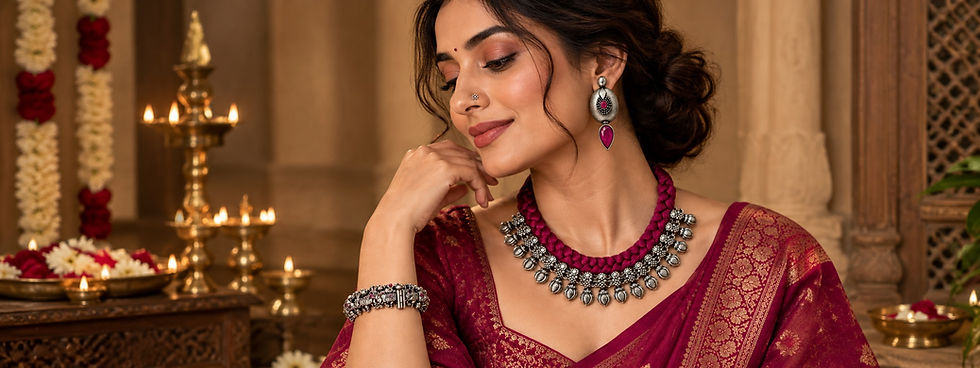
12. Traditional Clothes and Shringar Items
For many women, Karwa Chauth is also an occasion to wear festive clothing and traditional adornments. Sarees, suits, bangles, bindis, mehendi and jewellery are commonly associated with the celebration.
These preparations are not pooja essentials in the strict sense, but they are an important part of the occasion for many families. Some women wear heirloom jewellery or choose pieces that reflect their personal style while retaining a traditional look.
For jewellery inspiration, explore our companion article: Karwa Chauth Jewellery Guide: Traditional Necklaces and Statement Pieces for Your Festive Look.
How to Arrange Your Karwa Chauth Pooja Thali
Once your essentials are ready, arranging them in advance can make the evening ritual easier to follow.
Step 1: Clean and prepare your pooja space
Choose a clean, comfortable area for the ritual. Arrange a small platform or table and cover it with a clean cloth if that is part of your household custom.
Step 2: Place the karwa and water vessel
Keep the karwa and any additional lota or water vessel in their customary positions. Prepare them according to the ritual followed by your family.
Step 3: Arrange the pooja thali
Place the roli or kumkum, akshat, flowers, diya and customary offerings on the thali. Use small bowls to keep loose items organised.
Step 4: Prepare the diya safely
Keep the diya, oil or ghee and wick ready. Light it at the appropriate point in your family's ritual, ensuring it remains on a stable surface.
Step 5: Keep the vrat katha and other ritual items ready
If your family listens to or recites the Karwa Chauth vrat katha, keep the relevant text or prayer materials accessible. Arrange any additional items required by your customary practice.
Step 6: Keep the channi ready for moonrise
Place the sieve somewhere convenient, along with any other items needed for the moon-viewing ritual. Check the local moonrise time in advance, as it varies by location.
A well-prepared thali does not need to be elaborate. A clean arrangement with the necessary items is enough to help the ritual proceed comfortably.
A Quick Preparation Reminder
Before the evening pooja, check that your karwa or water vessel, decorated thali, diya, pooja powders, akshat, sindoor, sweets, mathri, fruits, flowers, chunni, baya offering and vrat katha are ready as required by your family tradition.
Preparing these essentials beforehand allows you to focus on the observance and the time spent with family, rather than making last-minute arrangements.
The Cultural Significance of Traditional Pooja Objects
Traditional ritual objects often carry meanings shaped by generations of household practice. A karwa recalls the familiar use of water vessels in Indian rituals; a diya brings light into the pooja space; flowers and offerings express customary forms of devotion; and the thali gathers these elements into one arrangement.
The materials used for these objects also reflect India's long-standing craft traditions. Clay vessels, brass lamps, copper pots and decorated metal plates are made by artisans whose skills have been passed down and adapted over time.
Brass and copper pooja items, in particular, remain popular choices in many homes because they can be reused for different festivals and daily worship. Their appeal lies not only in their appearance but also in their place within familiar household traditions.
When choosing pooja essentials, consider their intended use, size, ease of cleaning and durability. A thoughtfully selected item can become part of a family's festive preparations for years to come.
Preparing Your Home for the Evening Ritual
Karwa Chauth preparations often extend beyond the pooja thali. A few simple arrangements can help create a welcoming atmosphere for the evening.
Prepare a clean pooja area: Arrange the required objects in advance and keep the space uncluttered.
Add seasonal flowers: Fresh flowers or petals can lend a festive touch to the arrangement.
Use diyas thoughtfully: Place lamps securely and keep them away from curtains, clothing and other flammable materials.
Keep the evening essentials together: Store the channi, karwa, pooja thali and other required items in one accessible place.
Plan for moonrise: Check a reliable local Panchang or moonrise calendar for your city.
Make room for family traditions: If relatives gather for the vrat katha or group pooja, prepare a comfortable place for everyone.
The aim is not to create an elaborate display, but to make space for a meaningful observance that feels familiar and comfortable to your household.
Karwa Chauth Traditions: Customs May Differ Between Families
Although certain elements are widely associated with Karwa Chauth, there is no single arrangement that every household follows.
Some families observe the vrat katha together, while others follow a different sequence of prayers. The choice of karwa, the items placed on the thali, the offerings and the customs followed after moonrise may also vary by region and family tradition.
If you are observing Karwa Chauth for the first time, asking an elder or a trusted family member about your household's customary practices can be helpful. You can also consult a local Panchang for the date and moonrise time relevant to your location.
Fasting practices should be approached with consideration for individual health and circumstances. Anyone who is pregnant, unwell, taking medication or managing a health condition should seek appropriate medical advice rather than feeling obliged to follow a fasting practice that may not be suitable for them.
Ultimately, the observance is personal as well as cultural. Families may preserve long-standing customs while adapting their preparations to suit their present-day needs.
Frequently Asked Questions About Karwa Chauth Pooja Essentials
What are the main items needed for Karwa Chauth pooja?
Common essentials include a karwa, pooja thali, diya, roli or kumkum, akshat, flowers and customary offerings. Many families also prepare a sieve for the moon-viewing ritual and a small water vessel. The exact list depends on family and regional customs.
What should be kept on a Karwa Chauth pooja thali?
A typical thali may contain roli or kumkum, whole rice grains, flowers, a diya and customary offerings. Some families also include sweets, a small water container or other items required by their ritual.
Why is a sieve used during Karwa Chauth?
In many traditions, the moon is viewed through a sieve before the customary moon-viewing ritual is completed. The sieve has consequently become one of the recognisable objects associated with Karwa Chauth. The exact sequence of the ritual may vary between families.
What is Baya or Bayana in Karwa Chauth?
Baya, also known as Bayana or Bayna, is a traditional gift offering associated with Karwa Chauth in many North Indian families. It is often prepared for the mother-in-law and may include sweets, mathri, dry fruits, clothing, money or other customary gifts. In some traditions, the woman's parents prepare or send the offering to her in-laws. The contents and customs vary between families and regions.
Can brass pooja items be used for Karwa Chauth?
Yes. Brass diyas, plates, bowls and water vessels are used in many Indian household worship practices. Choose items suited to the ritual, follow any customary instructions for their use, and clean them according to the care guidance appropriate for the material.
When should the Karwa Chauth pooja thali be prepared?
Preparing the thali earlier in the day is a practical approach. It allows you to check that the required items are available before the evening pooja and expected moonrise.
Does every family follow the same Karwa Chauth ritual?
No. Practices differ across regions, communities and households. Follow the customs relevant to your family and consult a reliable local Panchang for location-specific timings.
From the Athizay Heritage Desk
At Athizay, we believe that understanding the stories behind traditional objects helps us appreciate their place in everyday cultural life.
A brass diya lit for an evening prayer, a karwa prepared for a family ritual or a pooja thali carefully arranged before moonrise can carry memories of celebrations shared across generations. These objects become part of the way traditions are remembered, practised and passed forward.
Karwa Chauth brings together many such familiar elements: devotional practices, household preparations, festive adornment and the time families set aside for a cherished observance. Their meaning is shaped by the people who use them and the traditions they choose to preserve.
Through our heritage storytelling, we explore the customs, craftsmanship and cultural connections behind the objects that find a place in Indian homes.
Because heritage lives not only in the objects we preserve, but also in the traditions and memories we carry forward.
Continue Exploring the Athizay Karwa Chauth Collection
Preparing for Karwa Chauth involves more than gathering the essentials for the evening ritual. For many, it is also a time to choose festive jewellery, bring out cherished accessories and celebrate personal style alongside family traditions.
Continue exploring our Karwa Chauth Jewellery Guide: Traditional Necklaces and Statement Pieces for Your Festive Look for ideas on completing your festive look with traditional necklaces and statement jewellery.
Explore the traditions that matter to you, prepare thoughtfully and make the occasion your own.
Athizay — Rooted in Heritage, Styled for Today.


Comments