
Shravan Somvar Vrat: Meaning, Rituals, Puja & Spiritual Significance
Updated: Aug 24
📚 Athizay Heritage Series – Part 3

When Monday Becomes a Day of Devotion
There is a different kind of stillness on a Shravan Monday.
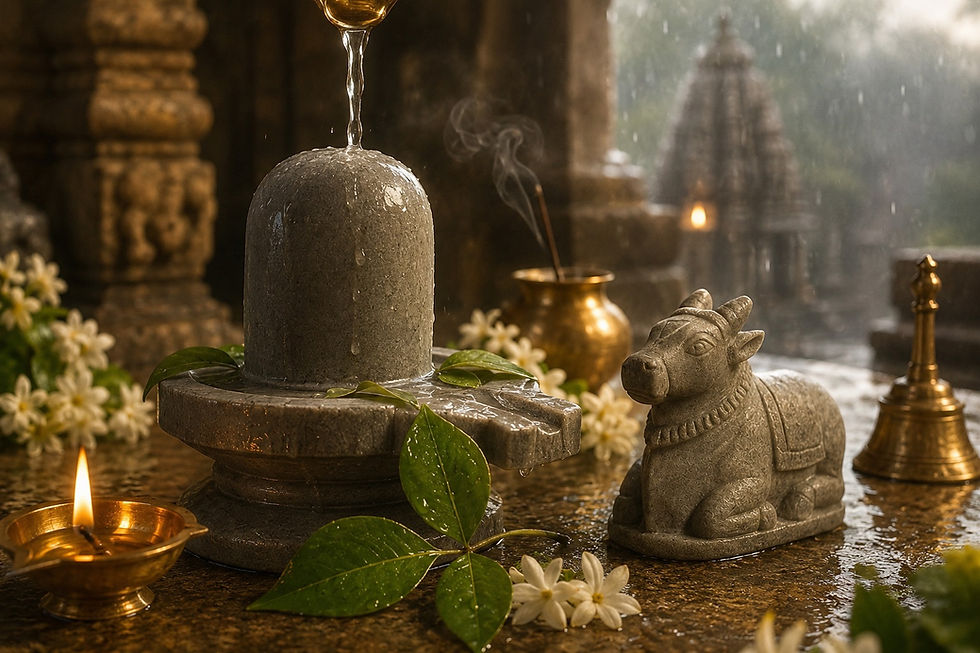
The morning may begin with the sound of a temple bell, the fragrance of incense, and a simple offering of water over a Shiva Lingam. Some devotees visit a temple before sunrise, while others create a quiet space for prayer at home.
Across India, Mondays during Shravan bring millions of devotees together in remembrance of Lord Shiva.
Known as Shravan Somvar, these Mondays are traditionally observed through fasting, prayer, Shiva Abhishek, mantra chanting, temple visits, and acts of devotion.
But why is Monday considered sacred to Lord Shiva? What is the meaning behind the Shravan Somvar Vrat? And how can someone observe it at home in a simple and meaningful way?
Let's explore the tradition behind one of the most cherished practices of the Shravan month.
What Is Shravan Somvar?
Shravan Somvar refers to the Mondays that fall during the Hindu month of Shravan (Sawan).
The word Somvar comes from Soma, a name associated with the Moon, and var, meaning day. Monday is traditionally associated with Lord Shiva, who is often depicted with the crescent moon adorning His matted hair.
During Shravan, Mondays are therefore considered especially auspicious for Shiva worship.
Devotees may observe a Somvar Vrat, perform puja, offer water to the Shiva Lingam, chant Om Namah Shivaya, and spend time in prayer and reflection.
The exact customs can vary between families and regions, but the central idea remains the same: devotion, discipline, and remembrance of Lord Shiva.
Why Is Monday Dedicated to Lord Shiva?
Monday has a special place in Shaiva traditions.
One of the most recognisable symbols associated with Lord Shiva is the crescent Moon, known as Chandra or Soma. Shiva is traditionally depicted wearing the crescent Moon in His hair, which is one reason Monday carries a natural association with Him.
For devotees, observing Monday as a day of Shiva worship is an opportunity to pause from ordinary routines and dedicate time to prayer and spiritual reflection.
During Shravan, this weekly observance takes on an even deeper significance.
What Is the Purpose of Shravan Somvar Vrat ?
A vrat is more than simply going without food.
In Hindu traditions, a vrat can represent a personal commitment to discipline, devotion, restraint, and spiritual focus.
For some devotees, fasting is the central practice. For others, the day may involve prayer, meditation, temple visits, charitable acts, or avoiding distractions.
The deeper purpose is not simply what you don't eat, but how consciously you observe the day.
Shravan Somvar can therefore become an opportunity to:
Practise self-discipline
Spend time in prayer
Cultivate gratitude
Reduce distractions
Reflect on personal actions
Strengthen devotion
Develop a sense of inner calm
Shravan: A Season of Renewal
For those living in cities like Delhi, the arrival of rain can feel like a breath of fresh air—quite literally. After long, hot and dusty days, people often look forward to a good spell of rain that settles dust and can temporarily improve the air by helping remove some particulate matter from the atmosphere.
But the monsoon does more than change the air around us. It transforms the landscape. The earth becomes greener, rivers and ponds are replenished, and everything seems to receive a fresh lease of life.
Nature appears to pause, refresh, and begin again.
Perhaps there is something beautifully symbolic about this seasonal renewal and the traditions of Shravan.
Just as the rains refresh the world around us, Shravan invites us to turn inward and create our own space for renewal.
The Somvar Vrat can be understood in this spirit—not simply as giving up certain foods, but as an intentional practice of restraint and awareness. By simplifying our routine, becoming more mindful about what we consume, making time for prayer, and reducing unnecessary distractions, we create an opportunity to prepare ourselves for a deeper kind of cleansing: the cleansing of our thoughts, intentions, and actions.
It is not a medical "detox." Rather, it is a spiritual reset.
The body follows a simpler rhythm.
The mind becomes quieter.
Thoughts become lighter.
Actions become more deliberate.
And as Shravan progresses, this discipline can help us carry a renewed sense of clarity and firmness into the weeks ahead.
As the monsoon refreshes the earth, Shravan invites us to refresh ourselves.
How to Observe Shravan Somvar Vrat at Home
There is no need for an elaborate setup to observe Shravan Somvar.
A simple and sincere prayer can be meaningful.
Here is a traditional home-worship sequence that can be adapted according to your family customs.
1. Begin the Day With Cleanliness
Devotees traditionally begin the morning by bathing and wearing clean clothes.
If possible, create a clean and peaceful space for your prayer.
2. Prepare Your Puja Space
A simple Shiva puja may include:
Shiva Lingam
Clean water
Bilva leaves
Flowers
Incense
Diya
Sandalwood paste
Fruits or a simple offering
You do not need every item. Devotion and sincerity are more important than elaborate arrangements.
3. Begin With a Prayer
Light the diya and incense.
Take a quiet moment to settle your mind before beginning the puja.
You may begin by remembering Lord Shiva and seeking His blessings.
4. Perform Jal Abhishek
One of the most familiar rituals of Shravan Somvar is Jal Abhishek—the offering of water to the Shiva Lingam.
Gently pour clean water over the Shiva Lingam while offering your prayers.
Many devotees chant:
Om Namah Shivaya
as they perform the Abhishek.
The flowing water is traditionally understood as an offering of purity, humility, and devotion.
For a more detailed explanation of Shiva Abhishek, we will explore the ritual in Part 4 of the Athizay Heritage Series.
5. Offer Bilva Leaves
Fresh Bilva (Bel) leaves are traditionally offered to Lord Shiva.
Before offering them, devotees commonly wash them and place them gently on the Shiva Lingam.
The three leaflets of the Bilva leaf carry several traditional interpretations in Hindu practice and are deeply associated with Shiva worship.

Did You Know ?
The Bilva tree has been revered in Indian traditions for centuries. Its leaves and fruit have also been valued in traditional systems of Indian wellness.
The spiritual significance of the Bilva leaf, however, comes from its long-standing place in Shiva worship.
6. Offer Flowers and Light the Diya
Fresh flowers can be offered according to family tradition.
A lit diya represents light and is commonly included in Hindu worship as a symbol of auspiciousness and the dispelling of darkness.
The combination of a diya, incense, flowers, and quiet chanting can transform even a small home prayer space into a peaceful place for reflection.
7. Chant and Meditate
After the offerings, spend a few quiet moments in prayer.
The mantra Om Namah Shivaya is one of the most widely known Shiva mantras.
Rather than rushing through many repetitions, devotees may choose to chant slowly and mindfully.
The rhythmic nature of mantra chanting can also create a meditative routine, while the spiritual meaning remains rooted in devotion.
What Can You Eat During Shravan Somvar Vrat?
Fasting practices vary considerably between families and regions.
Some devotees observe a strict fast, while others eat one simple meal or consume fruits, milk, nuts, or traditional vrat foods.
Common fasting foods can include:
Fruits
Milk
Nuts and seeds
Sabudana
Samak rice
Singhara flour
Potatoes
Certain root vegetables
However, there is no single fasting rule followed by every Hindu family.
If you observe a vrat, follow your family's established tradition or the guidance of your spiritual teacher
What Should You Avoid During the Vrat?
Traditional restrictions also vary.
Many devotees choose to avoid:
Meat and fish
Alcohol
Certain grains
Excessively processed foods
Onion and garlic, depending on family tradition
The purpose is generally to keep the day simple and focused on devotion.
It is important not to treat these customs as universal rules. Shravan practices differ across communities, regions, and family traditions.
Is Fasting Necessary to Worship Lord Shiva?
No.
This is an important point.
Fasting is a traditional form of vrata, but it is not the only way to express devotion to Lord Shiva.
A person who cannot fast can still observe Shravan Somvar through:
Prayer
Shiva Abhishek
Chanting
Meditation
Temple visits
Charity
Helping others
Practising compassion and self-discipline
For many devotees, the spirit behind the vrat is more important than the physical act of fasting.
Tradition Meets Modern Life
Shravan fasting also offers an interesting perspective on mindful living.
Many devotees naturally simplify their meals on fasting days and become more conscious about what and when they eat.
From a modern wellness perspective, mindful eating and structured routines can help some people become more aware of their eating habits. However, fasting should not automatically be described as a "detox" or a scientifically proven way to cleanse the body.
Similarly, prayer, meditation, and mantra chanting are spiritual practices. Research has explored their potential relationship with stress, attention, and emotional well-being, but these findings should not be presented as scientific proof of religious beliefs.
For devotees, the deeper purpose of Shravan Somvar remains spiritual: to create space for devotion, reflection, discipline, and connection with Lord Shiva.
A Simple Shravan Somvar Puja at a Glance
If you prefer a simple routine, you can follow this sequence:
Morning
Bathe and wear clean clothes.
Clean your prayer space.
Light a diya.
Offer water to the Shiva Lingam.
Offer Bilva leaves and flowers.
Chant Om Namah Shivaya.
Sit quietly for a few minutes in prayer or meditation.
Throughout the Day
Follow your chosen fasting tradition.
Practise patience and kindness.
Avoid unnecessary distractions.
Spend time in prayer or spiritual reading.
Evening
Light a diya again.
Offer a simple prayer.
Express gratitude.
Break your fast according to your family's tradition.
Shravan Somvar and the Shiva Lingam
The Shiva Lingam occupies a central place in many Shravan observances.
As we explored in Part 1 of the Athizay Heritage Series, the Shiva Lingam is traditionally understood as a symbol of the infinite and formless nature of Lord Shiva.
During Shravan Somvar, the simple act of offering water, Bilva leaves, flowers, and prayers becomes a way of connecting with that symbolism.
For many families, this ritual becomes a cherished weekly tradition passed from one generation to another.
Shravan Somvar Beyond Ritual
Perhaps the most beautiful part of Shravan Somvar is that its lessons can extend beyond Monday.
The vrat encourages us to pause.
To simplify.
To reflect.
To practise restraint.
To choose compassion.
And to make time for something deeper than the everyday rush of life.
Whether observed through fasting, prayer, meditation, or a simple glass of water offered to a Shiva Lingam, Shravan Somvar invites devotees to bring a little more awareness into their daily lives.
Frequently Asked Questions
What is Shravan Somvar?
Shravan Somvar refers to the Mondays during the Hindu month of Shravan, traditionally dedicated to the worship of Lord Shiva.
Is Shravan Somvar fasting compulsory?
No. Fasting is a traditional observance, but devotees may express their devotion through prayer, Abhishek, chanting, meditation, charity, and other practices.
Can I perform Shravan Somvar Puja at home?
Yes. A simple home puja can include a Shiva Lingam, water, Bilva leaves, flowers, a diya, and prayer.
What mantra can I chant during Shravan Somvar?
Om Namah Shivaya is one of the most widely used mantras dedicated to Lord Shiva.
Can children observe Shravan Somvar?
Children can participate in age-appropriate ways such as offering flowers, helping with a diya under supervision, listening to prayers, or learning about Lord Shiva. Strict fasting should not be imposed on children without appropriate guidance.
What if I cannot fast?
You can still observe Shravan Somvar through prayer, meditation, Abhishek, temple visits, charity, or simply dedicating time to Lord Shiva.
How many Shravan Somwars are there?
The number varies according to the Hindu calendar and regional tradition. In North Indian traditions, Shravan commonly includes four Mondays, while other regions can have different dates and counts. In 2026, North Indian Shravan Somwars fall on August 3, 10, 17 and 24; some western and southern regions observe them on August 17, 24, 31 and September 7.
From the Athizay Heritage Desk
A tradition becomes truly timeless when it continues to find a place in everyday life.
Shravan Somvar is one such tradition—a simple rhythm of prayer, reflection, and devotion that has travelled across generations.
At Athizay, we believe India's heritage lives not only in ancient stories and temples, but also in the small rituals we continue to bring into our homes.
Through the Athizay Heritage Series, we hope to explore these traditions with curiosity, respect, and an appreciation for the craftsmanship and cultural stories that surround them.
📚 Continue Your Spiritual Journey
Continue exploring the Athizay Heritage Series:
✅ Part 4: How to Perform Shiva Abhishek at Home
Coming Next
Part 5: Why Are Bilva Leaves Offered to Lord Shiva?
Final Thoughts
Shravan Somvar is not simply a day of fasting.
It is a pause in the week—a chance to step away from distractions, remember what matters, and reconnect with faith.
Whether you observe a traditional vrat, perform Jal Abhishek, offer a few Bilva leaves, chant Om Namah Shivaya, or simply spend a few quiet moments in prayer, the essence remains the same:
Devotion does not have to be elaborate to be meaningful.
Sometimes, a little water, a Bilva leaf, a glowing diya, and a sincere prayer are enough to create a moment of stillness.
Har Har Mahadev. 🔱


Comments