
The Story, Spiritual Significance & Timeless Traditions of Shravan
Updated: Aug 25
Understanding Shravan Significance: Why Sawan Is Sacred to Lord Shiva
📚 Athizay Heritage Series – Part 2
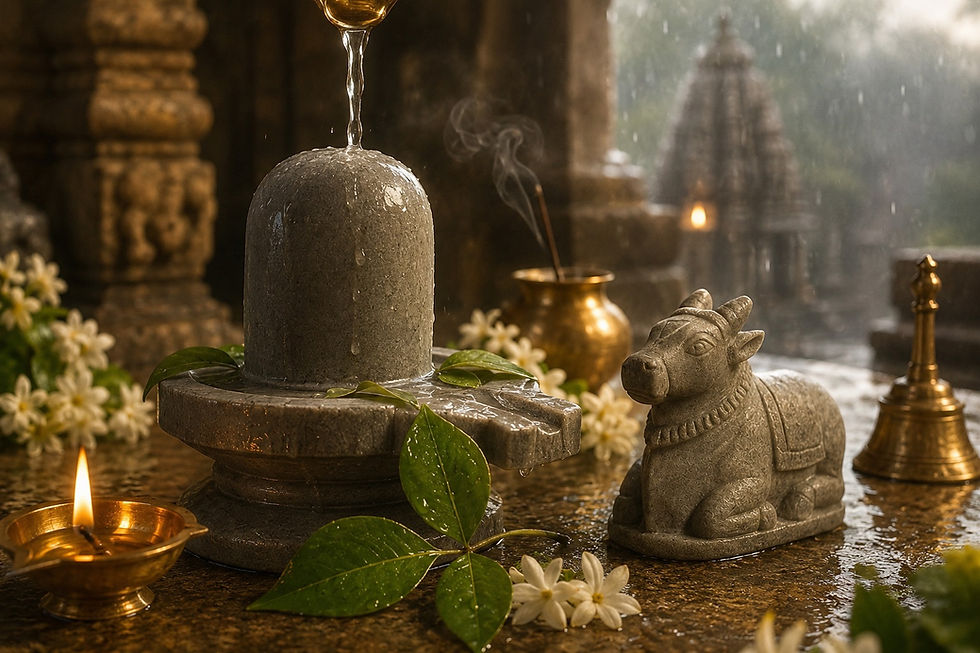
When the Monsoon Brings More Than Rain
As dark monsoon clouds gather across India, something remarkable begins to unfold.
Temple bells ring from the early hours of the morning. The fragrance of incense fills the air, chants of "Har Har Mahadev" echo through ancient temples, and millions of devotees dressed in saffron begin journeys carrying sacred water for Lord Shiva.
Homes become places of prayer, Mondays are observed with devotion, and Shiva temples witness some of the largest gatherings of the year.
This sacred period is known as Shravan, also called Sawan in many parts of India.
For millions of devotees, Shravan is far more than a month in the Hindu calendar—it is a time for devotion, self-discipline, gratitude, and spiritual renewal.
But what makes this month so special?
The answer lies in ancient traditions, timeless stories, and a deep spiritual philosophy that continues to inspire generations.
What Is Shravan?
Shravan is one of the most sacred months in the Hindu lunar calendar and is especially dedicated to Lord Shiva.
Falling during the monsoon season, it is traditionally associated with prayer, fasting, temple visits, charity, mantra chanting, and acts of self-discipline.
Across different regions of India, the dates and local customs may vary slightly depending on the calendar followed, but the spirit of Shravan remains the same—drawing closer to Lord Shiva through devotion and mindful living.
Why Is Shravan Dedicated to Lord Shiva?
According to Hindu tradition, the significance of Shravan is closely connected with one of the most celebrated stories in Indian mythology—the Samudra Manthan, or the Churning of the Ocean.
This timeless story explains why Lord Shiva is lovingly remembered as Neelkanth, the one who selflessly protected the universe.
The Story of Samudra Manthan
Long ago, the Devas (celestial beings) and the Asuras (powerful beings) sought Amrit, the nectar of immortality.
To obtain it, they agreed to churn the cosmic ocean using Mount Mandara as the churning rod and Vasuki, the divine serpent, as the rope.
As the great churning began, many precious treasures emerged from the ocean.
But before the nectar appeared, a deadly poison known as Halahala surfaced.
Its power was so destructive that it threatened all of creation.
Unable to contain its devastating effects, the Devas sought the help of Lord Shiva.
Moved by compassion for all living beings, Lord Shiva consumed the poison to save the universe.
To prevent it from spreading through His body, Goddess Parvati gently held His throat, causing it to turn blue.
From that moment, Lord Shiva came to be lovingly known as Neelkanth—the Blue-Throated One.
In Hindu tradition, many devotees offer water, milk, and prayers during Shravan as a symbolic expression of gratitude and devotion to Lord Shiva.

Did You Know?
The name "Neelkanth" comes from two Sanskrit words:
Neel – Blue
Kanth – Throat
It commemorates Lord Shiva's compassionate act of protecting creation during the Samudra Manthan.
Why Do Devotees Offer Water to the Shiva Lingam?
One of the most recognisable rituals during Shravan is Jal Abhishek—the offering of water to the Shiva Lingam.
According to Hindu tradition, devotees perform this sacred ritual in remembrance of Lord Shiva's sacrifice after consuming the Halahala poison.
Water is offered with humility and devotion, symbolising purity, gratitude, and surrender.
Many devotees also offer:
· Bilva (Bel) leaves
· Milk
· Flowers
· Sandalwood paste
· Sacred ash (Vibhuti)
The emphasis is not on the quantity of the offering, but on the sincerity of one's devotion.
Why Are Bilva Leaves So Important?
Among all offerings made to Lord Shiva, the Bilva (Bel) leaf holds a special place.
Traditionally, its three leaflets are associated with different sacred interpretations, including Lord Shiva's Trishul and the Trimurti.
Offering fresh Bilva leaves is regarded as a simple yet meaningful expression of devotion.

Did You Know ?
The Bilva tree has been respected in Indian traditions for centuries. Beyond its spiritual importance, its fruit, leaves, and other parts have also been valued in traditional systems of wellness
Why Is Monday So Important During Shravan?
Monday, known as Somvar, has long been associated with Lord Shiva.
During Shravan, devotees observe Shravan Somvar Vrat, a day dedicated to prayer, fasting, chanting, and temple visits.
Many believe that this practice encourages discipline, gratitude, and deeper spiritual reflection.
Our next article explores the meaning, rituals, and traditions of Shravan Somvar in greater detail.
Shravan Across India
One of the beautiful aspects of Shravan is how it is celebrated in diverse ways across the country.
Some devotees undertake the Kanwar Yatra, carrying sacred river water to Shiva temples.
Others visit Jyotirlingas, organise community prayers, perform Rudrabhishek, or simply spend time in quiet meditation at home.
Although customs differ from region to region, the central message remains the same—devotion, humility, and remembrance of Lord Shiva.
Tradition Meets Modern Life
Shravan encourages a slower, more mindful way of living.
Many devotees choose simpler meals, dedicate time to prayer, reduce distractions, and practise meditation or mantra chanting.
Modern research has explored how practices such as mindful meditation, rhythmic chanting, and intentional routines may support emotional well-being, reduce perceived stress, and improve focus.
For devotees, however, the value of Shravan extends beyond measurable benefits. It is a sacred opportunity to deepen faith, cultivate gratitude, and strengthen one's spiritual connection.
How Shravan Inspires Daily Life
The lessons of Shravan remain meaningful beyond the festival itself.
It reminds us to:
· Choose compassion over anger.
· Practise gratitude each day.
· Create time for prayer and reflection.
· Serve others with humility.
· Let go of negativity and embrace inner peace.
These timeless values continue to inspire millions of people, regardless of where they live.
Frequently Asked Questions
Why is Shravan dedicated to Lord Shiva?
According to Hindu tradition, Shravan honours Lord Shiva's compassion and His role in protecting the universe during the Samudra Manthan.
Can I worship Lord Shiva at home during Shravan?
Yes. Many devotees perform simple daily worship with water, Bilva leaves, flowers, and prayers in their home temple.
Why is Shravan Somvar considered special?
Mondays are traditionally associated with Lord Shiva, and observing devotion on these days during Shravan holds special significance in Hindu tradition.
Is fasting compulsory during Shravan?
No. While many devotees observe fasts according to their family traditions or personal beliefs, devotion can also be expressed through prayer, charity, meditation, and righteous living.
📚 Continue Your Spiritual Journey
Continue exploring the Athizay Heritage Series:
✅ Part 4: How to Perform Shiva Abhishek at Home
Coming Next
Part 5: Why Are Bilva Leaves Offered to Lord Shiva?
From the Athizay Heritage Desk
India's festivals are more than celebrations—they are living traditions that carry stories, values, and craftsmanship from one generation to the next.
At Athizay, we celebrate this heritage through thoughtfully handcrafted creations inspired by devotion, artistry, and timeless Indian culture. Our goal is not only to offer meaningful products but also to share the stories that make these traditions so enduring.
Final Thoughts
Shravan is a reminder that true devotion is expressed through compassion, humility, and mindful living.
Whether you visit a temple, perform a simple prayer at home, chant "Om Namah Shivaya," or spend a quiet moment in gratitude, every sincere act of devotion reflects the timeless spirit of this sacred month.
May this Shravan bring peace to your heart, clarity to your thoughts, and the blessings of Lord Shiva to your home.
Har Har Mahadev!


Comments