
What Is a Shiva Lingam? Meaning, Symbolism & Spiritual Significance
Updated: Aug 24

📚 Athizay Heritage Series
A collection of thoughtfully researched articles exploring India's spiritual traditions, timeless craftsmanship, and cultural heritage.
You are reading Part 1 of the Shiva Knowledge Hub.
Part | Status |
✅ Part 1 | What Is a Shiva Lingam? |
✅ Part 2 | Why Is Shravan the Holiest Month for Lord Shiva? |
✅ Part 3 | Shravan Somvar Vrat |
✅ Part 4 | Shiva Abhishek Guide |
Before the Temple Bells Ring…
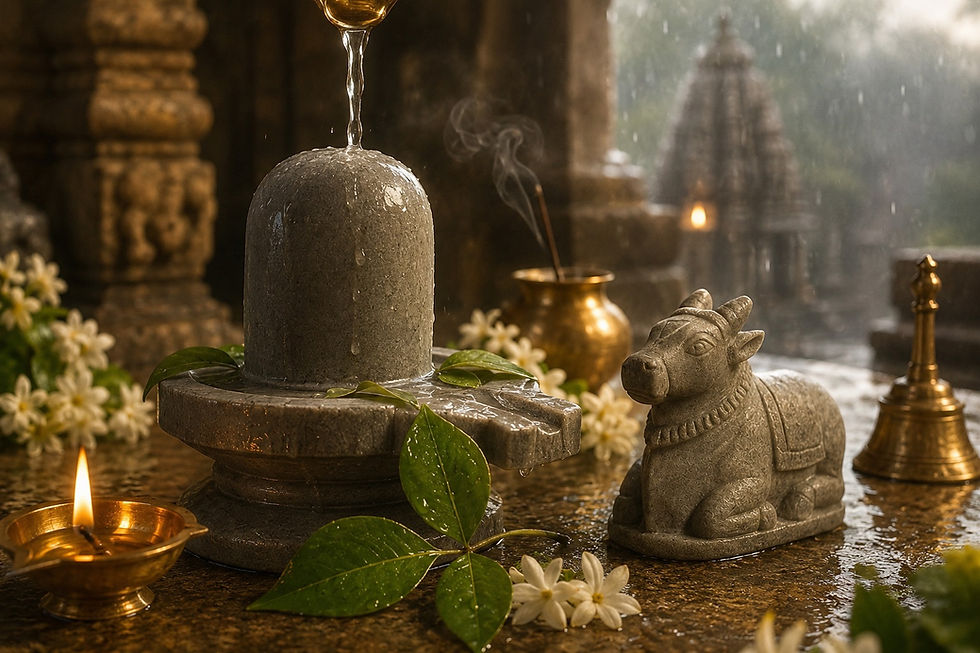
As the first rays of sunlight touch the temple courtyard, the air fills with the gentle fragrance of incense and the rhythmic chanting of “Om Namah Shivaya.” A devotee quietly pours water over a smooth Shiva Lingam, offers fresh Bilva leaves, and folds their hands in prayer.
This timeless ritual has been performed for centuries in temples, homes, and sacred shrines across India. Yet, for many people—especially younger generations and those discovering Hindu traditions—the question remains:
What is a Shiva Lingam, and why is it worshipped with such deep devotion?
The answer goes far beyond what meets the eye.
The Shiva Lingam is one of the oldest and most profound symbols in Hindu philosophy.
It represents the eternal, formless nature of Lord Shiva and reminds us that the Divine exists beyond human imagination, beyond shape, and beyond time.
What Does “Shiva Lingam” Mean?
The word Lingam comes from the Sanskrit word Linga, meaning “mark,” “sign,” or “symbol.”
A Shiva Lingam is therefore understood as the sacred symbol of Lord Shiva. Rather than depicting a human form, it represents the infinite reality that cannot be confined to physical appearance.
In Hindu philosophy, Lord Shiva is often described as formless consciousness—the eternal presence from which all creation arises and into which everything eventually returns.
The Shiva Lingam beautifully expresses this idea through its simple yet powerful form.
Why Is the Shiva Lingam Worshipped Instead of an Idol?
Unlike many deities who are represented in human form, Lord Shiva is also worshipped through the Shiva Lingam because it symbolizes the limitless nature of the Divine.
Its smooth, continuous shape has no beginning and no end, reminding devotees that the universe itself is eternal and ever-changing.
For millions of devotees, worshipping the Shiva Lingam is not about worshipping a stone. It is about connecting with the divine qualities that Lord Shiva represents:
· Inner peace
· Wisdom
· Transformation
· Compassion
· Detachment from ego
· Balance between creation and dissolution
The Spiritual Symbolism of the Shiva Lingam
The Shiva Lingam carries layers of meaning that have been explained by philosophers, saints, and spiritual teachers for centuries.
The Infinite
Its simple form reminds devotees that the Divine cannot be limited by human imagination.
Creation and Consciousness
The Lingam rests upon the Yoni, representing Goddess Shakti. Together they symbolize the harmonious union of consciousness (Shiva) and creative energy (Shakti), from which life continually unfolds.
Transformation
Lord Shiva is known as the transformer—the one who removes ignorance so that wisdom can emerge.
For many devotees, praying before a Shiva Lingam is a reminder to let go of fear, anger, pride, and negativity while embracing inner growth.

Did You Know?
The Shiva Lingam is one of the most ancient symbols of worship in the Indian subcontinent. Archaeological discoveries and literary references suggest that Lingam worship has been part of India’s spiritual traditions for thousands of years.
Why Do Devotees Offer Water and Bilva Leaves?
One of the most recognisable forms of Shiva worship is Abhishek, the ceremonial bathing of the Shiva Lingam.
Traditional offerings include:
· Pure water
· Milk
· Bilva (Bel) leaves
· Flowers
· Sandalwood paste
· Sacred ash (Vibhuti)
Each offering carries symbolic meaning.
Water represents purity.
Milk represents devotion.
Bilva leaves are traditionally believed to be especially dear to Lord Shiva.
Rather than elaborate rituals, these simple offerings remind devotees to approach prayer with humility, gratitude, and sincerity.
The Importance of the Shiva Lingam During Shravan
The holy month of Shravan (Sawan) is one of the most sacred periods dedicated to Lord Shiva.
According to Hindu tradition, devotees observe fasting, perform Abhishek, chant “Om Namah Shivaya,” and visit Shiva temples throughout the month.
It is believed that sincere prayers offered during Shravan strengthen devotion, encourage self-discipline, and inspire spiritual reflection.
We’ll explore the deeper significance of Shravan in our upcoming guide: “Why Is Shravan the Most Sacred Month for Lord Shiva?”
Types of Shiva Lingams
Over centuries, devotees have worshipped Shiva Lingams made from different natural materials, each appreciated for its own traditional significance.
Natural Stone Shiva Lingam
Natural stone Shiva Lingams are admired for their timeless appearance, durability, and connection with nature. Every stone has unique colours and patterns, making each Lingam one of a kind.
Marble Shiva Lingam
Marble Shiva Lingams are often chosen for home temples because of their elegant appearance and smooth finish.
Crystal (Sphatik) Shiva Lingam
Crystal Lingams are traditionally associated with purity, clarity, and peaceful meditation.
Metal Shiva Lingam
Brass, copper, silver, and panchdhatu Shiva Lingams are commonly used in temples and household worship due to their strength and traditional craftsmanship.
Tradition Meets Modern Life
People often ask whether there is any scientific reason behind practices associated with Shiva worship.
It’s important to understand that science and spirituality explore different questions.
Science studies measurable effects, while faith speaks to personal belief and spiritual experience.
Modern research has found that practices commonly associated with devotion—such as meditation, slow breathing, mantra chanting, and mindful rituals—may help reduce stress, improve concentration, and promote emotional well-being.
For devotees, however, these rituals are much more than wellness practices. They are acts of devotion that strengthen one’s connection with the Divine.
Common Misconceptions About the Shiva Lingam
Over time, misconceptions about the Shiva Lingam have circulated due to incomplete understanding of Hindu philosophy.
In the Shaiva tradition, the Shiva Lingam is fundamentally regarded as:
· A symbol of the infinite Divine.
· A representation of Supreme Consciousness.
· A reminder of the unity of creation.
· A focus for meditation and devotion.
Its deeper philosophical meaning has been explained in Hindu scriptures and by spiritual teachers for centuries.
Bringing Sacred Traditions Home
A home temple is more than a place for rituals—it is a quiet space for gratitude, reflection, and peace.
Many families choose a natural stone Shiva Lingam for their prayer space because every piece carries its own unique colours, textures, and character, reflecting the beauty of nature itself.
Whether your daily worship is simple or elaborate, sincerity of devotion has always been considered the most meaningful offering.
Frequently Asked Questions
Can anyone worship a Shiva Lingam?
Yes. Lord Shiva is revered as the Lord of all beings, and people from all walks of life offer prayers with faith and respect.
Which day is considered most auspicious for Shiva worship?
Monday is traditionally dedicated to Lord Shiva. Worship during Shravan Mondays and Mahashivratri is especially significant.
Can I keep a Shiva Lingam at home?
Yes. Many households keep a Shiva Lingam in their home temple and perform simple daily worship with water, flowers, and Bilva leaves.
What is the significance of chanting “Om Namah Shivaya”?
It is one of the most revered mantras dedicated to Lord Shiva and is traditionally chanted to cultivate devotion, inner peace, and spiritual focus.
From the Athizay Heritage Desk
India’s spiritual traditions have been passed down through generations—not only through scriptures but also through the hands of skilled artisans who continue to create sacred pieces with devotion and care.
At Athizay, we honour this heritage by celebrating craftsmanship inspired by timeless traditions. Every handcrafted creation reflects our appreciation for culture, artistry, and the beauty of meaningful living.
Final Thoughts
The Shiva Lingam is more than a sacred symbol—it is an invitation to look beyond the visible and connect with something timeless.
Whether you are beginning your spiritual journey, exploring Hindu philosophy, or creating a peaceful prayer space at home, understanding the meaning of the Shiva
Lingam opens the door to a tradition that has inspired millions for centuries.
As you offer your prayers with humility and faith, may Lord Shiva bless your life with wisdom, courage, harmony, and inner peace.
📚 Continue Your Spiritual Journey
Continue exploring the Athizay Heritage Series:
✅ Part 4: How to Perform Shiva Abhishek at Home
Coming Next
Part 5: Why Are Bilva Leaves Offered to Lord Shiva?


Comments